Writer and director Ray Yeung developed the film after reading Oral Histories of Older Gay Men in Hong Kong by Travis S. K. Kong, a sociologist at the University of Hong Kong, which collects interviews with elderly gay men in the city. Yeung contacted Kong, met several of the interviewees over dinners and home visits, and drew details of their accounts into a script he worked on from 2016 to 2019. Tai Bo, Ben Yuen and Patra Au built their roles from that material, with Au stating that she modelled the wife Ching partly on her cousin's wife.
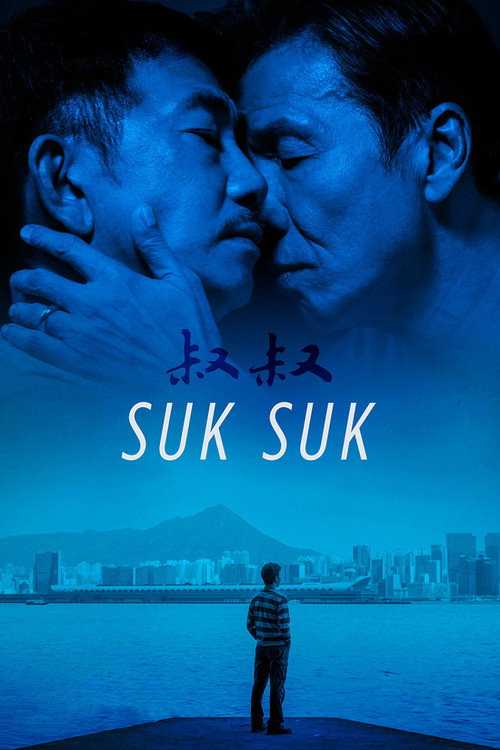
The film was produced by New Voice Film Productions, shot in Cantonese, edited by William Chang and Nose Chan, and runs 92 minutes. It premiered at the 24th Busan International Film Festival on 4 October 2019 and screened in the Panorama section of the 70th Berlin International Film Festival in 2020. Golden Scene released it in Hong Kong cinemas on 28 May 2020, and Strand Releasing handled the North American release in February 2021.
Direction is credited to Ray Yeung. The screenplay is credited to Ray Yeung. The film uses the Mandarin song 微風細雨 (Gentle Breeze and Drizzle), performed in the film's version by Qing Shan, written and composed by Lin Gongxin and originally recorded by Liu Lanxi. No official soundtrack album or official audio upload was located. Original music for the film is credited to Veronica Lee.
Hong Kong theatrical classification. Hong Kong films are classified under the Film Censorship Ordinance by the Office for Film, Newspaper and Article Administration; the category IIB listing for 叔.叔 appears on the Hong Kong cinema listings service WMOOV.
M+ records that Yeung spent four years developing Suk Suk, his third feature and his first Cantonese language film. He came to the material through Travis S. K. Kong's oral history research, contacted Kong at the University of Hong Kong, and then met and spent time with some of the surviving interviewees before writing. Yeung told Junkee that the film was ultimately financed through crowdfunding, largely from investors within the LGBT community, several of whom came to the table reads.
The film was produced by New Voice Film Productions, with Michael J. Werner, Teresa Kwong, Sandy Wai Shan Yip and Chowee Leow as producers, Yeung and Stan Guingon as executive producers and Leung Ming-kai as cinematographer, and runs 92 minutes. It world premiered at the Busan International Film Festival in October 2019, opened in Taiwan on 27 February 2020 through 采昌, and opened in Hong Kong on 14 May 2020 with a Category IIB rating. Yeung has said he rehearsed the intimate scenes as choreography first, comparing them to action or musical numbers, and then asked the actors to drop the technique and play them naturally.
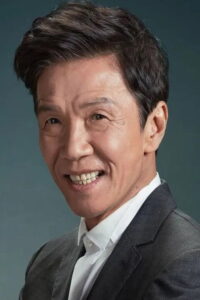
Ray Yeung told Film Inquiry that he found Tai Bo through Philip Yung's 2009 film Glamorous Youth, liked his naturalistic playing and approached him directly, and that Tai Bo agreed after reading the script and showing it to his wife. China Times reported that Tai Bo took about two months to decide, that his wife read the script and gave her approval, and that she visited the set during shooting.
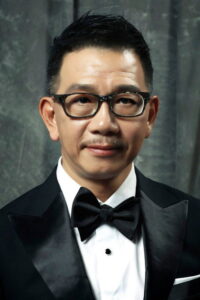
Yeung told Film Inquiry that he noticed Ben Yuen in a Hong Kong government produced television drama, admired his body language and understated playing, and telephoned him directly; Yuen, then around fifty, wore ageing makeup for the part, and China Times reported that his stage background had already included kissing scenes. Patra Au came to the film after Yeung cold called the Hong Kong Repertory Theatre, whose management recommended her, and he screen tested her before casting because she was primarily a stage actress. Yeung has said in interviews with New Bloom and Junkee that casting the two leads took roughly ten to twelve months and involved travelling repeatedly between Hong Kong and Taipei, where Tai Bo was living.
Suk Suk grew out of Oral Histories of Older Gay Men in Hong Kong by Travis S. K. Kong (江紹祺) of the University of Hong Kong's Department of Sociology, published in Chinese as 男男正傳; New Bloom describes the book as gathering roughly a dozen men in their sixties and seventies, and Chinese language coverage of the film gives twelve men aged 63 to 89. Yeung read the book, reached out to Kong, and then met and spent time with some of the men who were still living, saying he felt it urgent to record their experiences. He told Roar News that rather than adapting one account he recreated the story by taking parts from different men and blending them into a love story, which let him address the difficult material without making the film only about suffering.
He has repeatedly cited one interviewee who, asked whether he regretted a lifetime in the closet, said he did not, because he had a wife who made him soup and children who gave him an allowance, and called himself a success story; Yeung has said this shaped his decision to present the characters without pity or judgment. Yeung also told Junkee that the two real men were separate interviewees and that the meeting and romance between Pak and Hoi were his invention, and that he supplemented the book with visits to care homes and observation of the living conditions of isolated older people. The strand in which Hoi attends community meetings about an LGBT friendly retirement scheme comes from that fieldwork.



Discussion 0 comments
Join other fans talking about Twilight’s Kiss. Be kind, no spoilers without tags, no spam.
No comments yet.
Share the first reaction below.