Among the 121 titles reviewed here, exactly one lists Omegaverse among its key themes: Pit Babe (2023), a Thai series about a professional racing team. The term itself is a rank system borrowed from western fan fiction, and this page explains the mechanism rather than the content.
One label across 121 titles
The measurement is narrow on purpose. Only the key themes of each title were read, and only an exact label counted. A synopsis that gestures at a rank system without the label does not count, and neither does a genre tag.
Key theme labels counted on 14 September 2026 across the 121 titles reviewed here.| Label in key themes | Titles |
|---|
| Omegaverse | 1 |
|---|
| Power Imbalance | 5 |
|---|
| Fantasy (genre, for comparison) | 30 |
|---|
| All titles reviewed | 121 |
|---|
The term names a hierarchy, not a setting
Omegaverse is a fictional social hierarchy. It sorts every character into one of three ranks, conventionally labelled alpha, beta and omega, and those ranks carry obligation and status the way a caste carries them in a period drama. A character does not choose a rank. Other characters can read it. It follows them into work, into family arrangements and into who is allowed to make a claim on whom.
The useful comparison is a royal succession rule. In a palace drama, the order of birth decides who inherits, who must marry whom, and who has to keep quiet about a preference. Nobody in the story argues about whether the rule is real. It simply is, and the plot is built out of people bending under it or around it. Omegaverse installs the same kind of rule in a world that otherwise looks like ours. This page describes that device and not the material that fan communities have built on top of it.
The ranks also come with a shorthand: A/B/O, which is how the trope is indexed on most fan archives. Readers searching the term usually land on reference pages written for people already inside the convention. The plain version is the one above.
The trail runs from a 2010 prompt to Thai television
Fan history dates the trope to a prompt posted on a Supernatural fandom prompt board in May 2010, with the now standard alpha, beta and omega terminology appearing in later prompts in November 2010 and January 2011. Another account names a story posted on 24 July 2010 as the earliest recognised work and places the settled terminology around June 2011.
The accounts differ slightly on the eastward route, and the difference is worth stating rather than smoothing over. One records a Chinese translation of an A/B/O Sherlock story posted around October 2011, from which the convention moved into original danmei novels. The other puts the arrival in Chinese boys love circles in late 2013 and the arrival in Japanese fandom around 2014. Both agree that Japanese commercial publishing picked it up in the mid 2010s, with the first A/B/O manga dated to 2015. Screen adaptation came much later, and Pit Babe, in 2023, is the series named when the trope reaches live action.
Rank gives a contemporary story the obligation a period drama gets for free
This is the structural reason writers reach for it. A contemporary romance set in an office or a university has very little built-in obligation. Characters can quit, move, block a number or say no, and the writer has to manufacture a reason they do not. A period setting solves that instantly, because rank, family and law are already doing the work. So does a fantasy kingdom.
Omegaverse is a third option: keep the phones, the cars and the jobs, and import the hierarchy anyway. What the writer gets is three things at once. Obligation, because rank imposes duties a character cannot simply decline. Secrecy, because rank can be concealed and concealment can fail at a chosen moment. And conflict with an institution rather than with a villain, because the rule sits above everyone in the cast.
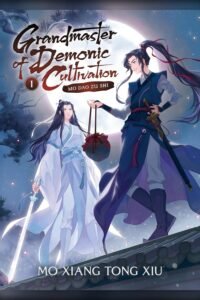
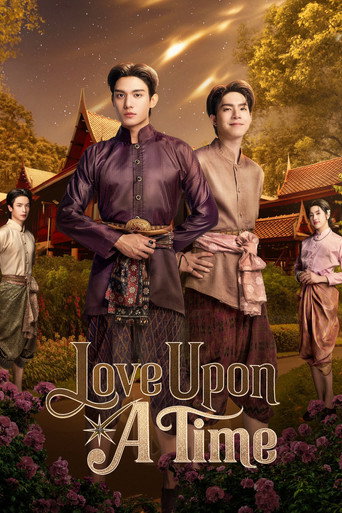
Look at how other series solve the same problem without it. The Untamed and its source Mo Dao Zu Shi get the same machinery from sect hierarchy and cultivation rank. Love Upon a Time and its web novel get it from a historical setting. Cherry Magic and the Thai version use a supernatural ability to force disclosure that a character would otherwise avoid. Uranus2324, the only Science Fiction title among those reviewed here, uses time. Each is a different route to the same structural problem, and only one of them keeps the modern world intact while adding a binding rule.
In Pit Babe the label sits next to motorsport
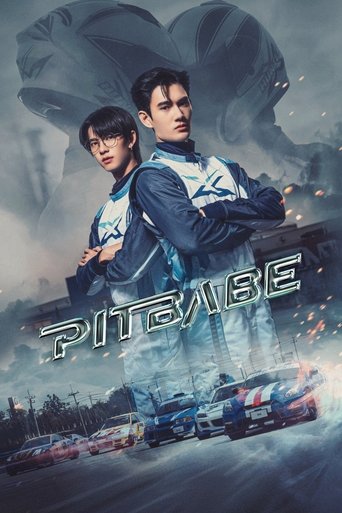
Pit Babe ran 13 episodes on Channel One31 from 17 November 2023 to 9 February 2024, produced by Change2561 and adapted from a two volume Thai novel. Its key themes read: Motorsport, Omegaverse, Power Imbalance, Found Family, Rivalry, Conspiracy. That ordering is the whole point. The rank system comes second, after the sport, as one component of a racing team drama rather than as the world itself.
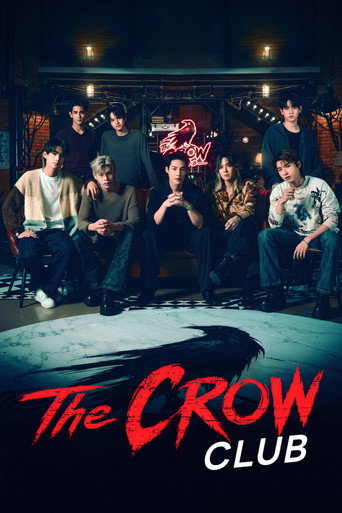
The genre list reads Romance, Drama, Action, Sports, Fantasy, Thriller. Fantasy is doing specific work there. A series about drivers, pit crews and a team owner would have no reason to carry a fantasy tag; the hierarchy is what puts it in. Change2561 has two other titles, The Crow Club and This Love Doesn’t Have Long Beans, and neither carries the label.
Power Imbalance is a separate label, and it is five times more common
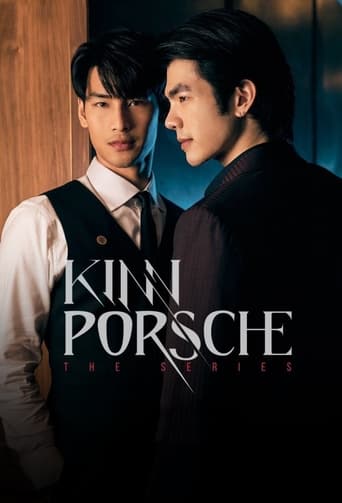
Five titles carry Power Imbalance in key themes: Payback (Manhwa), Payback (Novel), KinnPorsche, Pit Babe and My Stand-In. Only one of those five also carries Omegaverse. The labels are not synonyms. Naming the second label is as far as this article goes with it.
Why it stands alone among the titles reviewed here
One title in 121 is 0.8 percent of the titles reviewed here, and that describes this selection, not the genre worldwide. Print boys love publishing uses the convention far more widely, as the history above shows. Among the 96 BL titles reviewed here, the convention appears in exactly one, and the hierarchies in the rest arrive through a palace, a sect or a family business rather than through a biological rank.












Discussion 0 comments
Join other fans talking about What Is Omegaverse in BL? The Rank System and the Racing Drama That Uses It. Be kind, no spoilers without tags, no spam.
No comments yet.
Share the first reaction below.