One hundred and thirty one production companies are credited across this catalogue. Seventy one of them appear exactly once. The four busiest hold 31 of the 145 credits between them, and all four are Thai. Outside Thailand, almost nobody makes a second show.
The count, and what the rule throws out
Every title record carries a production company field. It is a plain comma separated list, so a record can name one company or six. I split each field on the comma, trimmed the names, and counted a credit each time a company appeared on a record. No normalising of spelling, no merging of parent firms with subsidiaries.
Of the 121 title records, 95 name at least one company. The other 26 name none, and that exclusion is not random: they are the novels, web novels, manga and manhua records, where the field that carries the maker is the publisher rather than the production company. So every figure below describes 95 filmed or animated records, not the full 121.
Companies with more than two credits across the 95 records that name one.| Company | Credits | Country of the records |
|---|
| GMMTV | 14 | Thailand |
|---|
| Studio Wabi Sabi | 9 | Thailand |
|---|
| Domundi TV | 4 | Thailand |
|---|
| Mandee Work | 4 | Thailand, Japan |
|---|
| avex pictures | 3 | Japan |
|---|
| The One Enterprise | 3 | Thailand |
|---|
| Change2561 | 3 | Thailand |
|---|
That is the head. The tail is the finding. Seventy one companies carry one credit, 17 carry two, three carry three, two carry four, and then the count jumps to nine and fourteen with nothing in between. Three quarters of the companies in this catalogue made one thing here and never came back.
How the 95 companies distribute across 145 credits.| Credits held | Companies | Share of companies |
|---|
| 1 | 71 | 75% |
|---|
| 2 | 17 | 18% |
|---|
| 3 | 3 | 3% |
|---|
| 4 | 2 | 2% |
|---|
| 9 or 14 | 2 | 2% |
|---|
The top four companies touch 27 of the 95 records, which is 28 percent. Widen it to the top seven and you get 36 records, 38 percent. A catalogue of 95 records leans on seven firms, while the other 88 companies hold two credits or fewer each.
Thailand is the only industry here where the same company comes back
Split the 95 records by country of origin and the shape stops being one shape. I counted, for each country, how many of its records were made by a company that also appears elsewhere in the catalogue.
Repeat producers by country, among records that name a production company.| Country | Records | Distinct companies | Records made by a repeat company |
|---|
| Thailand | 53 | 39 | 40 (75%) |
|---|
| Japan | 14 | 24 | 5 (36%) |
|---|
| South Korea | 12 | 16 | 4 (33%) |
|---|
| China | 8 | 7 | 3 (38%) |
|---|
| Taiwan | 5 | 8 | 0 (0%) |
|---|
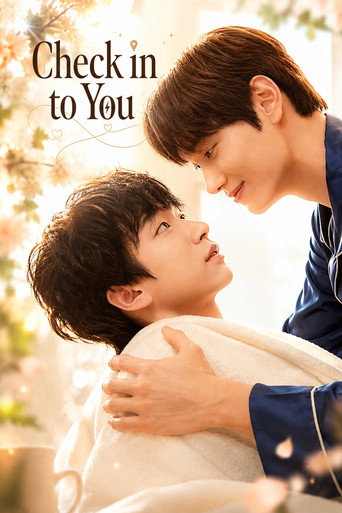
Thailand runs 53 records through 39 companies, fewer companies than records. Thirteen of those 39 have more than one credit. Japan runs 14 records through 24 companies, more companies than records, and only four of the 24 repeat. Taiwan’s five records use eight companies and not one of them appears twice: Fragrance of the First Flower and Connecting to You share no maker with anything else here. South Korea’s three repeat firms are thin too: Matchbox and STRONGBERRY co-produced Blossom Campus and Check In to You, and Studio Yanggwibi made the first two Love Class seasons before the third went elsewhere.
Japan’s number is not thin credits. It is the opposite. Japanese records average 2.07 companies each, the highest of any country in this catalogue, against 1.43 for Thailand and 1.12 for China. Cherry Magic! Thirty Years of Virginity Can Make You a Wizard?! names six companies on one record. Your Summer, My Storm names three. That is a production committee: several firms assembled per project, dissolving after it. Thailand names fewer companies per record, but the same names return.
The pairing link looks strong until you hold country still
Forty three of the 170 records carry a named performer pairing. The obvious hypothesis is that a company with a slate builds pairings because a pairing is an asset it can reuse across that slate. The raw split supports it: of the 56 records made by a company with more than one credit, 35 carry a pairing, which is 62 percent. Of the 39 records made only by one credit companies, 8 carry a pairing, 21 percent.
That gap does not survive a country control. All 43 paired records in this catalogue are Thai. Among the 15 non Thai records made by repeat companies, none carries a pairing, and among the 27 non Thai one off records, none does either. Restrict to Thailand and the difference shrinks to 35 of 41 against 8 of 12, or 85 percent against 67 percent, on a comparison group of twelve records. That is a gap of about 19 points resting on four records going the other way, which is not a result.
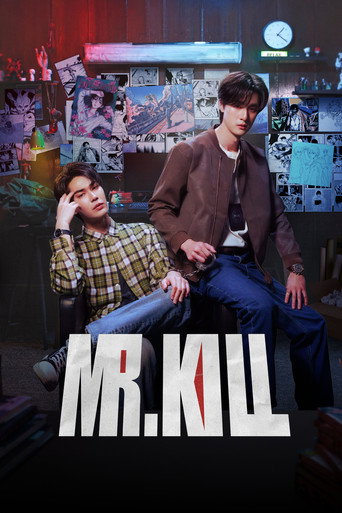
What the data does support is narrower. Inside Thailand, the largest slates carry pairings almost without exception. All nine Studio Wabi Sabi records carry one, Fourever You included, as do all three Change2561 records including Pit Babe, and 13 of GMMTV’s 14. The single GMMTV record with no pairing is Mr.Kill. But one off Thai companies do it too: KinnPorsche from Be On Cloud carries two pairings and Be On Cloud has one credit here. The Secret of Us from Channel 3 carries one. The pairing tracks the Thai industry, not the size of the slate.
Counting records overstates one studio’s slate
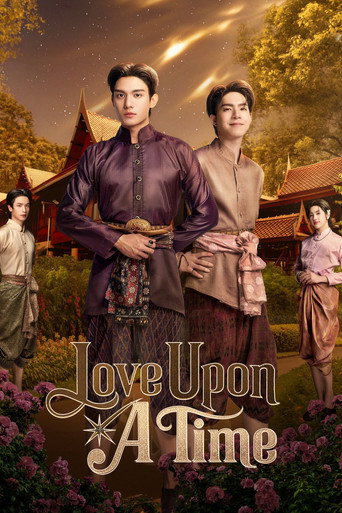
Studio Wabi Sabi’s nine credits are not nine projects. Seven of them are Fourever You entries: the two main parts, three part two continuations, and two specials, each a separate record on this site. Collapse every franchise to one group using the catalogue’s own franchise links and Studio Wabi Sabi drops from nine to three, behind Domundi TV and Mandee Work on four each, the two firms jointly credited on Love Upon a Time and Your Third.
GMMTV barely moves, 14 down to 13, because its records are genuinely separate shows: The Heart Killers, We Are, Only Boo! and eleven others. Under franchise collapse the tail gets longer, not shorter: 79 of the 95 companies hold exactly one group, 83 percent, and the 95 records reduce to 75 groups. Concentration at the very top is real and it is one company.
How this was counted, and where it could be wrong
Sample: 121 title records on this site, read on 14 September 2026. The field is production_company_text, split on commas. The country field is country_text, and where a record lists two countries I used the first. Pairings were read as the presence of at least one linked couple record.
Three limitations worth stating. First, the field is free text, so a company credited under two spellings counts twice and I did not merge any names; the one credit tail could be slightly shorter than 71. Second, the field records who is named on the site’s record, not legal production structure, so a broadcaster and a studio both appearing means both were credited, not that they contributed equally. WeTV and iQIYI Pictures appear as credits here for that reason. Third, the country samples outside Thailand are small: Taiwan’s zero percent rests on five records, and China’s on eight.
One thing did not hold. The pairing hypothesis looked clean at 62 percent against 21 percent and dissolved into a country effect once Thailand was held constant. Reported above as the weaker version rather than dropped, because the raw number is the sort a reader would otherwise find and believe.
Sources
- BLGLFLIX catalogue records, 121 title entries, read 14 September 2026. Fields used: production company, country, couples.
- TMDB for production company metadata underlying the catalogue records.
- Franchise groupings taken from the catalogue’s own linked franchise relations, used only for the collapse in the fourth section.




















Discussion 0 comments
Join other fans talking about Who Actually Makes BL and GL: The Production Companies Counted. Be kind, no spoilers without tags, no spam.
No comments yet.
Share the first reaction below.