Twenty six of the 170 records in the BLGLFLIX catalogue are not shows. They are web novels, novels, manga, a manhwa and a manhua, and each one carries the same 49 fields a drama carries. Every single one of the 26 also has its screen version filed in the same catalogue.
The count, and the rule that produced it
The rule is the content_type_text field and nothing else. Five values in that field describe a thing you read: Web Novel, Novel, Manga, Manhwa, Manhua. Everything else describes a thing you watch or attend. That split puts 26 records on the source side and 144 on the screen side.
The rule excludes three things worth naming. The Cherry Magic musical sits on the screen side because it is performed rather than read. Tie in books that exist only as a sentence inside another record’s adaptation_source field, such as the Nottakorn novel published alongside The Heart Killers, have no record of their own and do not count. Audio drama and drama CD releases are not filed as records at all.
Record types in the catalogue, split into the source layer and the screen layer, 170 records.| Type | Layer | Records |
|---|
| Web Novel | Source | 12 |
|---|
| Novel | Source | 7 |
|---|
| Manga | Source | 5 |
|---|
| Manhwa | Source | 1 |
|---|
| Manhua | Source | 1 |
|---|
| TV Series | Screen | 64 |
|---|
| Web Series | Screen | 20 |
|---|
| Anime | Screen | 4 |
|---|
| Special | Screen | 2 |
|---|
| Movie | Screen | 2 |
|---|
| Anime Movie, Series, Musical | Screen | 3 |
|---|
On the other side of the join, 34 of the 144 screen records share a franchise cluster with at least one source record. So a little over a third of the shows here can be read as well as watched without leaving the catalogue.
A Thai web novel and a Japanese manga reach print by routes that share almost no field values
The source layer is 16 Thai records, 6 Japanese, 2 Korean and 2 Chinese. The screen layer, counting every country a record names so that co-productions appear in each row, is Thailand 54, Japan 14, South Korea 11, China 10, Taiwan 6, Hong Kong 3, and one each for Singapore, Vietnam and the Philippines. Taiwan, Hong Kong, Singapore, Vietnam and the Philippines contribute 12 screen records between them and no source records at all.
The magazine field is filled on 5 of the 26 source records, and all five are the Japanese manga: Kachi Comi, Gangan pixiv, Qpa, Dear+ and ComicFesta. That is the whole Japanese route in one field. A serial runs in a magazine, an imprint collects it into volumes, and the publisher field then names both the Japanese house and the English licensor, as with Takeshobo and Seven Seas Entertainment on Fake Fact Lips.
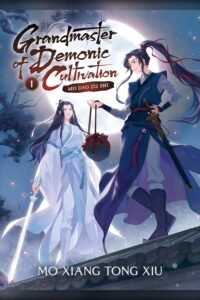
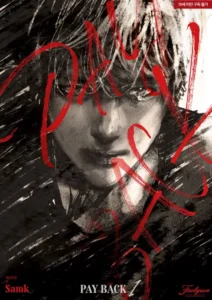
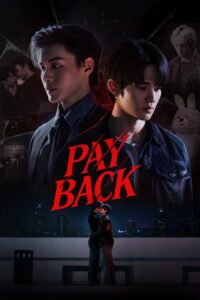
Not one Thai record carries a magazine. The Thai 16 run through publishers instead: Lavender holds 5, Deep Publishing and Satapornbooks hold 3, everY holds 2, and 4 are self published by the author, including GAP and Petrichor. Six of the 16 list a Thai reading platform, five of them MEB and one the MaReads and ReadAWrite pair. The Korean and Chinese records show a third shape again: Payback began as self published work by samK in 2010 and later moved to Pilyeon Management for a commercial digital edition, while the Mo Dao Zu Shi novel serialised on Jinjiang Literature City before Sichuan Literature and Art Publishing House printed it.
Five franchises carry three formats or more, and the biggest carries six
Building clusters from the franchise_titles seam gives 27 groups of two records or more, covering 76 of the 170 records. Counting distinct content_type_text values inside each cluster ranks them.
Franchise clusters by number of distinct record types, from franchise_titles.| Franchise | Formats | Records | Source records |
|---|
| Cherry Magic | 6 | 7 | 1 |
|---|
| Mo Dao Zu Shi | 4 | 5 | 2 |
|---|
| Fourever You | 3 | 12 | 5 |
|---|
| Payback | 3 | 3 | 2 |
|---|
| Unexpectedly Naughty Fukami | 3 | 3 | 1 |
|---|
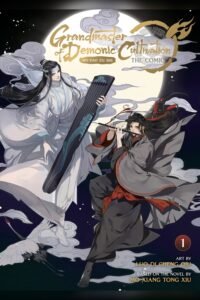
Cherry Magic runs manga, a Japanese drama, a Thai drama, an anime series, a live action film, an animated film and a stage musical across seven records. Mo Dao Zu Shi is the only cluster here with two source records of different kinds, a web novel and a manhua, feeding one live action series and two donghua. Fourever You is the largest cluster by record count at 12, and five of those twelve are the Lavender web novels.
Chapter counts against episode counts show exactly where the material goes
This is the part a reader can act on. Fifteen source records pair with exactly one screen record, and four of those pairs have a numeric chapter_count on one side and an episode count on the other.
Chapters against episodes for the four clean one to one pairs in the catalogue.| Source | Chapters | Screen version | Episodes | Chapters per episode |
|---|
| Until You #RiakDadSiThan | 12 | Your Dear Daddy | 8 | 1.5 |
|---|
| Anata wo Korosu Tabi | 10 | The Journey to Killing You | 6 | 1.7 |
|---|
| Chermchey | 28 | ChermChey | 10 | 2.8 |
|---|
| Ton Som Yu Ban Khao | 41 | When Oranges Fall | 12 | 3.4 |
|---|
The median across those four is 2.2 chapters per episode. The larger properties sit far above it. The Mo Dao Zu Shi manhua runs 259 chapters over 8 volumes and The Untamed runs 50 episodes at 45 minutes, which is 37.5 hours of screen time and about 5.2 manhua chapters per episode. The web novel behind both is 113 main chapters plus 7 extras across 5 volumes, and the extras have no episode anywhere in the cluster.
The Cherry Magic manga is 69 chapters in 16 volumes. The Japanese series is 12 episodes at 23 minutes, 4.6 hours, which is 5.8 chapters an episode; the Thai series is 12 episodes at 49 minutes, 9.8 hours, from the same 69 chapters. Payback as manhwa is 95 main chapters plus a 14 chapter side story, filed against a 10 episode series of 7.2 hours. That side story is a whole reading arc the episode count has no room for, and the record says so in the chapter_count field rather than leaving a reader to guess.
The Fourever You case is the clearest. Five Lavender web novels hold 244 chapters across 9 volumes between them, and the seven screen records in the cluster hold 68 episodes. Because the novels are filed by direction rather than by season, a reader can tell from the record titles alone which book carries which pair.
How this was counted, and where it could be wrong
Sample: all 170 title records in the BLGLFLIX catalogue, read on 14 September 2026. Fields read: content_type_text, country_text, language, publisher, magazine, chapter_count, volume_count, episodes, episode_duration and the computed franchise_titles seam. Franchise clusters were built by union of the franchise_titles links, so two records connect if either one names the other.
Three limitations. First, chapter_count is filled on only 13 of the 26 source records and volume_count on 20, which is why the ratio table rests on four pairs rather than fifteen. Second, a chapter is not a fixed unit of anything; a 1,200 word web novel chapter and a 40 page manga chapter both count as one. Third, the finding that all 26 source records have a screen version in the catalogue is a selection effect rather than a discovery, because a source with no adaptation would not have been entered in the first place. It describes the catalogue’s shape, not the publishing world.
One check did not survive. Source records look far less distributed than screen records, with a median platform_count of 0.5 against 2. But 13 of the 26 source records have an empty network_text field, so that gap measures how completely the field has been filled, not where a book can actually be read. It is not reported as a distribution finding.
Sources
- BLGLFLIX catalogue, 170 title records and the computed title packs, read 14 September 2026.
- TMDB for screen record metadata, episode counts and runtimes.
- Publisher and imprint names as recorded in each source record: Lavender, Deep Publishing and Satapornbooks, everY, LUCKPIM, T&M, Square Enix, Akita Shoten, Tokuma Shoten, Takeshobo, Shinshokan, Suiseisha, KADOKAWA, Kidari Studio, Pilyeon Management, Sichuan Literature and Art Publishing House, Pinsin Studio and Seven Seas Entertainment.
- Serialisation platforms as recorded: Jinjiang Literature City, MEB, MaReads, ReadAWrite, Bomtoon, Lezhin Comics, Naver Series, Ridibooks, Gangan pixiv and ComicFesta.




















Discussion 0 comments
Join other fans talking about The Source Layer: Why Some of Our Records Are Books. Be kind, no spoilers without tags, no spam.
No comments yet.
Share the first reaction below.